

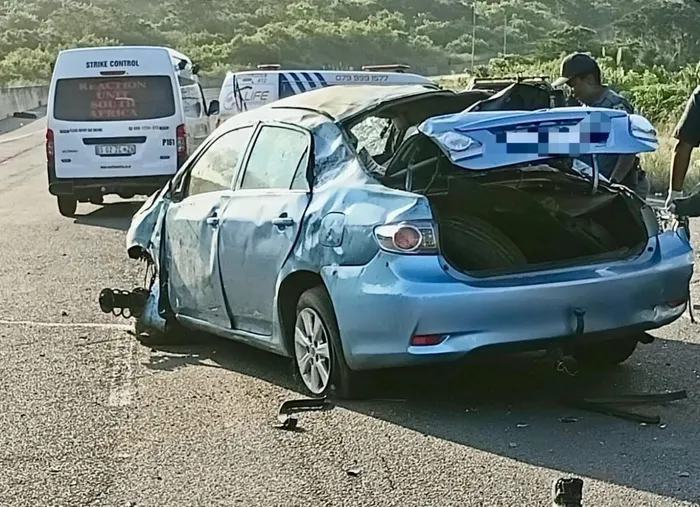
Discover the five crucial steps to take immediately after a car accident to ensure your safety, protect your legal rights, and streamline your insurance claims process.
Image: FACEBOOK
Car accidents are, by their very nature, unpredictable. Even the most cautious drivers can find themselves in a collision that leaves them feeling shaken, confused, and overwhelmed. In those high-stress moments, adrenaline often takes over, making it difficult to think clearly. However, the actions you take in the first thirty minutes after an accident are critical, not only to protect your physical well-being but also to safeguard your legal position and the success of your insurance claim.
Knowing the correct protocol is important. Here are five essential steps every motorist should take immediately after a collision:
Prioritise safety and check for injuries
The first priority is everyone involved’s well-being. Before assessing the damage to your vehicle, check yourself and your passengers for injuries. If the vehicle is still functional and it’s safe to do so, move it out of the flow of traffic to the shoulder of the road. Turn on your hazard lights and, if you have one, place a warning triangle a safe distance behind your car to alert oncoming motorists. Try to stay calm.
Contact emergency services
If there are any injuries, call for an ambulance immediately. In South Africa, you are also legally required to call the police to the scene of the accident if there are injuries, if a state-owned vehicle or property is involved, or if the other driver flees the scene.
Having the right insurance provides a distinct advantage here. Many modern policies include access to emergency roadside assistance and medical dispatch services, ensuring that professional help is only a phone call away.
Document the scene thoroughly
In the digital age, your smartphone is your best witness. Before the vehicles are moved or cleared by towing services, take comprehensive photos and videos of the positions of all vehicles involved; the specific damage to all cars; the surrounding environment (road signs, skid marks, or weather conditions), and the license discs of the other vehicles. This evidence helps your insurer to reconstruct the event and process your claim accurately.
Exchange information but don’t admit liability
You are required by law to exchange details with the other parties involved. Ensure you collect the following:
An important tip: While it’s important to be polite, don’t apologise or admit fault at the scene. Liability is a legal determination based on all available evidence; making an emotional admission in the heat of the moment can complicate the legal and claims process later.
Report the incident and notify your insurer
In South Africa, all accidents must be reported to the South African Police Service (Saps) within 24 hours to obtain an Accident Report (AR) number. This is a mandatory requirement for any insurance claim.
Once you have secured the scene and exchanged details, notify your insurer as soon as possible. Your insurer will arrange for approved towing services, guide you through the claims and repair process, and ensure you aren't left stranded.
Adequate insurance cover provides a safety net of professional support, legal guidance, and financial protection against the rising costs of repairs and third-party liabilities.
As weather events and other disruptions increase in frequency, the risk landscape for motorists is changing. Knowing what to do after an accident protects your safety and your finances. Having the right insurance in place ensures that when the unexpected happens, you aren't facing the aftermath alone. Regularly review your coverage levels - because the best time to prepare for an accident is before it happens.
*Radia is the chief commercial officer at Momentum Insure.
PERSONAL FINANCE