

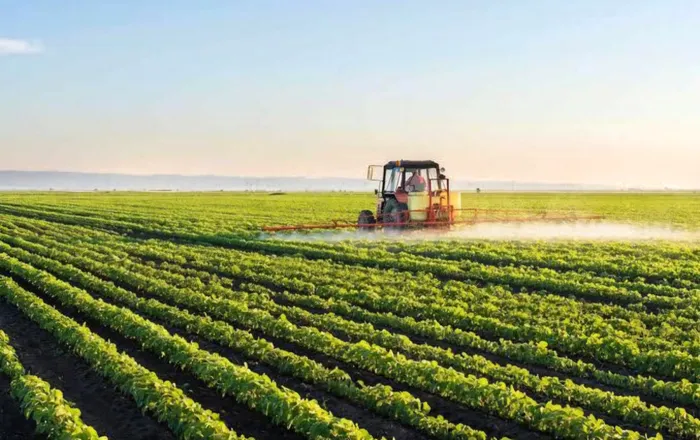
An economist has shared promising news for the 2025/26 summer grains and oilseeds season, with optimistic early estimates suggesting a potential yield of 19.82 million tonnes.
Image: File
South Africa's consumer food price inflation has shown a welcome easing, declining to 3.7 percent in February 2026 from 4.0 percent in January, according to the latest data released by Statistics South Africa.
This moderation, anticipated by many industry experts, reflects a stabilising food market bolstered by strong domestic and global supply chains.
Speaking to ENCA, Wandile Sihlobo, Chief Economist at Agbiz, noted that the trend is consistent with earlier forecasts predicting a softening of food inflation throughout the year.
"Essentially, the lower grain, fruit and vegetable prices, backed by ample domestic and global supplies, and moderating vegetable oil prices," he explained, "are among the key factors underpinning this decline."
In a further analysis, Sihlobo highlighted the current situation within the meat sector, stating that meat prices present minimal inflationary risk at this time.
Looking more closely at agricultural production, Sihlobo shared promising news for the 2025/26 summer grains and oilseeds season, with optimistic early estimates suggesting a potential yield of 19.82 million tonnes.
Nevertheless, he cautioned that recent flooding in regions such as Limpopo and Mpumalanga could pose challenges.
However, Sihlobo did not shy away from warning that rising fuel prices, particularly those linked to the ongoing conflict in the Middle East, pose a credible threat to the current positive trajectory of food prices.
"The fuel price remains a major upside risk, as it accounts for a substantial share of the distribution of food products," he remarked.
He explained that while fuel accounts for about 13 percent of grain farmers’ input costs, farmers are generally unable to pass these costs directly onto consumers, except through future production decisions.
Overall, Sihlobo expects food price inflation to continue slowing in 2026, although external pressures -- particularly fuel costs -- could alter the trajectory.