

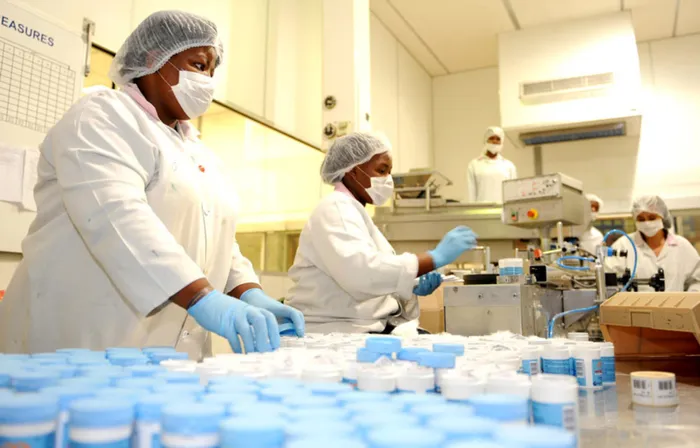
The announcement was made on the sidelines of the Africa Forward Summit in Nairobi, Kenya, on Tuesday where both organisations outlined plans for a demand and supply alignment framework designed to create sustainable markets for vaccines manufactured in Africa.
Image: Supplied
Africa Centres for Disease Control and Prevention (Africa CDC) and Aspen Pharmacare have entered advanced discussions on a long-term vaccine supply partnership aimed at strengthening Africa’s vaccine manufacturing capacity and reducing the continent’s reliance on imported vaccines.
The announcement was made on the sidelines of the Africa Forward Summit in Nairobi, Kenya, on Tuesday where both organisations outlined plans for a demand and supply alignment framework designed to create sustainable markets for vaccines manufactured in Africa.
The proposed framework is expected to play a significant role in advancing Africa’s health security objectives while creating long-term industrial and economic opportunities linked to pharmaceutical manufacturing across the continent.
Africa currently imports the vast majority of its vaccines despite consuming more than one billion doses annually.
The proposed collaboration seeks to address this imbalance by developing a multi-year framework focused on expanding local production capacity, ensuring supply security and creating stable demand for African-made vaccines.
The discussions are expected to focus initially on priority vaccine antigens, a phased increase in supply volumes that could eventually reach hundreds of millions of doses annually, and pricing models aimed at remaining competitive while supporting sustainable manufacturing.
Dr Jean Kaseya, director general of Africa CDC, said the discussions marked an important step in turning Africa’s vaccine manufacturing ambitions into practical and sustainable outcomes.
“These discussions with Aspen represent an important step toward translating Africa’s vaccine manufacturing ambitions into sustainable market realities,” Kaseya said.
“Africa CDC is committed not only to supporting local manufacturing, but also to working with partners to strengthen demand visibility, advance sustainable procurement approaches, and create viable market opportunities for African manufacturers. Ultimately, this is about securing reliable access and supply security for the continent through African-led production.”
The partnership discussions come as African governments and health institutions intensify efforts to build pharmaceutical and vaccine manufacturing capacity on the continent following lessons learned during the COVID-19 pandemic, when African countries struggled to secure timely access to vaccines amid global supply shortages.
Aspen Group CEO, Stephen Saad, said Aspen remained committed to becoming a leading African vaccine manufacturer and contributing to the continent’s health sovereignty agenda.
“Aspen remains aligned to our previously stated commitment to be an African vaccine manufacturer of choice,” Saad said.
“We are able to make a meaningful contribution towards decreasing the dependency on global imports by providing vaccine solutions for all Africans.”
Saad said Aspen’s investments in sterile manufacturing facilities in Gqeberha positioned the company to manufacture vaccines at scale for African and international markets.
“The multi-billion-rand investments in our sterile manufacturing capability in Gqeberha, South Africa, also enables Aspen to manufacture vaccines to scale,” he said.
“Further, we are well positioned to leverage our significant supply chain infrastructure to facilitate the distribution of desperately needed vaccines across the continent, just as we do with medicines to more than 115 countries internationally.”
Africa CDC and Aspen are also expected to explore financing models, procurement coordination and risk-sharing mechanisms to support the initiative.
This includes leveraging continental demand aggregation systems and the African Pooled Procurement Mechanism (APPM) to create predictable and sustainable demand for locally manufactured vaccines.
The engagement forms part of broader consultations by Africa CDC with African pharmaceutical manufacturers as the continent seeks to strengthen local production capabilities across vaccine development and other health products sectors.
BUSINESS REPORT