

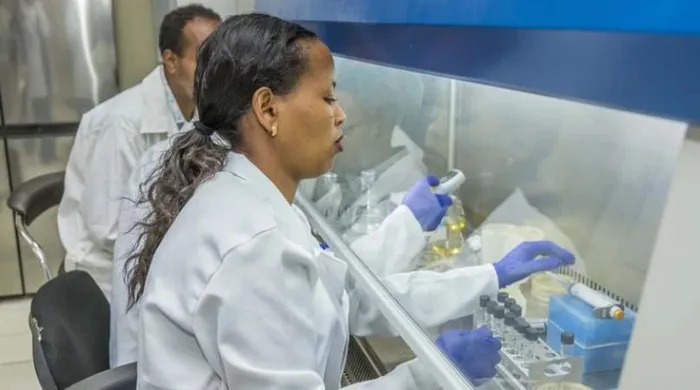
The development finance institution said the Biovac Kilimanjaro project is expected to create more than 340 skilled direct jobs and at least 7,000 indirect jobs throughout the vaccine manufacturing value chain.
Image: Supplied
The International Finance Corporation (IFC) has secured additional private capital for South African biopharmaceutical company Biovac’s vaccine manufacturing project, strengthening efforts to expand Africa’s local pharmaceutical production capacity.
African countries import 70–100% of finished pharmaceutical products and about 99% of vaccines, with less than 1% of vaccines used on the continent produced locally. This reliance leaves health systems vulnerable to global supply disruptions, price shocks, and export restrictions—risks that were brought into sharp focus during the COVID19 pandemic.
Announced at the ongoing Africa Forward Summit in Nairobi, Kenya, on Tuesday, the latest funding commitments form part of the Kilimanjaro project, an initiative aimed at developing an end-to-end vaccine manufacturing plant in Africa.
According to the IFC, the new financing package includes a $20 million (around R330 million) investment from French development finance institution Proparco as well as $20m in backing from private sector credit insurers.
Françoise Lombard, CEO of Proparco, said they were proud, on behalf of France, to support Biovac in its pan-African development.
“Expanding vaccine production capacity on the continent isessential to improve immunisation and strengthen the resilience of populations, particularly the most vulnerable,” Lobard said.
“The project will also reduce dependence on imports, foster innovation and create skilled jobs. Biovac is well positioned to achieve this ambition for the benefit of millions of Africans.”
The additional capital increases IFC’s total debt investment in the project to $40m.
The latest commitments build on an earlier financing announcement made during the World Bank Group Spring Meetings, where IFC disclosed a $20m debt investment alongside €75m from the Human Development Accelerator (HDX) guarantee programme.
The HDX programme is backed by the European Commission and implemented by the EIB Group in partnership with the Gates Foundation.
IFC said the expanded financing reinforces its long-term commitment to strengthening local pharmaceutical manufacturing capabilities across the African continent, while also helping create jobs and improve healthcare resilience.
The development finance institution said the Biovac Kilimanjaro project is expected to create more than 340 skilled direct jobs and at least 7,000 indirect jobs throughout the vaccine manufacturing value chain.
Dr Morena Makhoana, CEO of Biovac, said this unwavering support, particularly on a continent that still produces 1% of its own vaccine, is key in ensuring that Biovac contributes in making a long-lasting change and to ensure self-sufficiency in vaccine production in Africa.
“The new facility will ensure not only reliable supply of life-saving vaccines for Africa but will also allow additional skills capability, technology transfer and drive vaccine innovation that will benefit generations to come,” Makhoana said.
The project also aligns with the World Bank Group’s AIM2030 (Africa Initiative for Medical Access and Manufacturing) objectives, which are focused on expanding Africa’s ability to manufacture essential health products locally and at scale.
The goal of the AIM 2030 initiative is to support local manufacturing to advance the World Bank Group’s goal to deliver affordable, quality health services to 1.5 billion additional people by 2030.
"At its core, AIM2030 is about supporting Africa’s ambition to double pharmaceutical manufacturing capacity by 2030 through stronger regional manufacturing and supply chains," said Makhtar Diop, IFC managing director.
"Resilience cannot be imported in the middle of a crisis. It must be built in advance. That is why stronger regional manufacturing and supply chains matter. This is about health security. But it is also about jobs, investment, industrial growth, and economic resilience."
The IFC said the financing structure demonstrates how development finance institutions, commercial investors and private insurers can work together to support strategic healthcare infrastructure projects in emerging markets.
“By connecting development finance, commercial investors, and risk-sharing partners, IFC is helping crowd in private capital for projects that create jobs and support sustainable growth,” the institution said.
The corporation added that the partnership-driven financing model is intended to build resilient health manufacturing capacity on the continent while ensuring projects remain commercially viable.
The Kilimanjaro project forms part of broader efforts by African governments and global development finance institutions to reduce the continent’s dependence on imported vaccines and pharmaceutical products, a challenge that became particularly visible during the Covid-19 pandemic.
Africa currently imports the vast majority of its vaccines and pharmaceutical products, despite growing demand and an expanding healthcare market.
By supporting local manufacturing capacity, institutions such as IFC hope to improve supply chain resilience, boost industrialisation and create high-value jobs in the healthcare sector.
IFC, a member of the World Bank Group, said it continues to focus on mobilising private capital into emerging markets through blended finance structures and partnerships.
The institution said that in fiscal year 2025 it committed a record $71.7 billion to private companies and financial institutions in developing countries.
The financing was aimed at leveraging private sector solutions and mobilising additional capital to support economic development and poverty reduction initiatives globally.
BUSINESS REPORT