

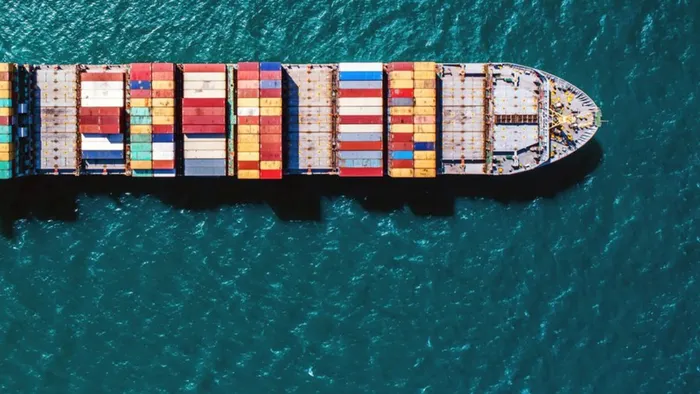
The supply chain between a barrel leaving a loading port and that same barrel entering a tank in Johannesburg is measured in weeks, not days.
Image: Maersk | X
South Africans may not yet be feeling the full impact of the latest oil shock, but the mechanics of the fuel market suggest the real pressure is still building.
According to Bianca Botes, MD of Citadel Global, what consumers see at the pump reflects a delayed version of what is happening in global markets. “The number that appears on a fuel price board is the end of a long sequence of factors. It is not a live reading of the market,” she said.
“The supply chain between a barrel leaving a loading port and that same barrel entering a tank in Johannesburg is measured in weeks, not days,” Botes said. “The market prices in what it expects future supply to look like, but consumers experience what supply looked like in the past,” she said.
Botes noted that during supply disruptions, physical oil markets move faster than benchmark prices, as buyers compete for available cargo. “When supply routes are disrupted… buyers who need actual oil now are bidding against each other for cargoes that tangibly exist and can be moved,” she said.
That disconnect creates a lag, Botes says. “This means that when you watch the Brent price on a screen during a supply disruption, you are watching yesterday’s agreed price,” she said.
For South Africa, which imports most of its fuel, the impact is compounded by logistics, said Botes. She noted that the country has shifted to sourcing more fuel from the US as supply from the Gulf has come under pressure, increasing transport distances and freight costs.
“The landed cost of a barrel of fuel in South Africa today reflects both the market price of the commodity and the substantially higher cost of getting it here from a different origin,” Botes said.
As of midday, the rand had weakened to around R16.60 to the dollar, after trading closer to R16.40 for several days, adding further pressure to imported fuel costs.
Brent crude was also up, trading well above the $100 mark at $109, as the war in the Middle East has no clear end in sight, while tankers have also been turned back by the US blockade, said Wichard Cilliers, head of Market Risk at TreasuryONE.
Ernst van Biljon, head lecturer of Supply Chain Management at the IMM Graduate School, said “with oil markets under pressure, long-distance logistics become significantly more expensive and unpredictable. This is particularly acute for South African businesses, where long lead times amplify every disruption.”
The most significant effect comes further down the chain, Botes said. “What makes supply disruptions even more damaging is the downstream trading behaviour,” she said.
As supply tightens, buyers begin ordering ahead of demand, building inventories and increasing storage, Botes noted. “While each of these decisions is rational in isolation, collectively, they amplify the apparent tightness in the market and drive prices harder than the physical reality justifies,” she said.
That behaviour pushes costs higher before they are reflected in official pricing, said Botes. Diesel markets, which are less tightly regulated than petrol, are already reflecting these pressures, with large commercial buyers exposed more directly to rising costs.
This has knock-on effects across the economy, particularly in transport, agriculture and manufacturing, said Botes.
Economists say these pressures will become more visible in inflation data in the coming months.
Investec chief economist Annabel Bishop said the impact of higher oil prices is expected to emerge in upcoming inflation figures. “March avoided the war’s effect, with a lag in the impact too on oil feedstocks,” she said.
Prices for oil, gas, fertilisers and aluminium have risen sharply amid emerging supply shortages amid high uncertainty as to the conflict’s duration and intensity, South African Reserve Bank governor Lesetja Kganyago said in the April Monetary Policy Review.
PSG senior economist Johann Els expects inflation to rise to between 3.7% and 3.8% as fuel costs feed through. Kganyago has added that the bank would act if it was deemed necessary to bring inflation under control.
IOL BUSINESS