

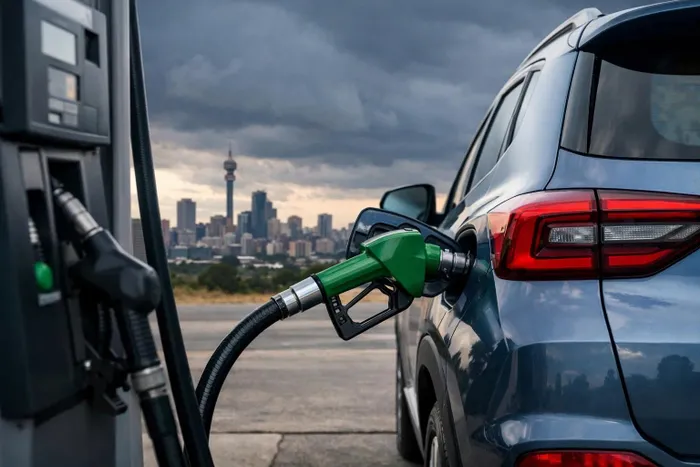
South Africans will be hit with significant petrol and diesel price increases once again in May.
Image: AI / Sora
As we enter the final week of April, a clearer picture is emerging of what South Africans might pay for petrol and diesel from next Wednesday, May 6.
As it stands, late-month data from the Central Energy Fund shows an under-recovery of R1.76 for 93 Unleaded petrol and R2.09 for 95 Unleaded. However, should current price trends persist until the end of this week, and assuming that the two grades are averaged out, South Africans should be looking at a petrol price increase of around R1.85 per litre.
The diesel situation is far more dire. Although the under-recovery is significantly smaller than it was at the beginning of April, when some were predicting an increase of R10 or more, diesel customers are still facing a diesel increase in the region of R4.10 in May. This comes after Treasury extended the diesel tax reprieve by a further 93 cents for next month, effectively reducing the General Fuel Levy penalty to zero.
Following news that Treasury's R3 per litre tax break has been extended into May, and assuming that the above-mentioned predictions materialise, South Africans will be paying around R24.38 for 95 Unleaded at the coast and R25.21 in Gauteng, where the cheaper 93 Unleaded is likely to sell for around R25.10.
The wholesale price of diesel is looking set to rise to around R29.35 at the coast and R30.11 in Gauteng, which could rise to R32 to R33 at the pumps, once the retail margins of this unregulated fuel are factored in.
Not quite the R40 blow that many feared, but still a significant premium over previous months and one that will surely have knock-on effects for general inflation.
National Treasury and the Department of Mineral and Petroleum Resources announced on Tuesday that the aforementioned fuel relief measures would continue for the month of May, in an effort to shield households and businesses from continued fuel price pressures. However, for June, the petrol price relief will be reduced to R1.50 per litre, while the diesel tax break will be lowered to R1.96 per litre. The tax relief will be removed completely from the beginning of July.
While the South African rand has remained relatively stable this month, volatile international oil prices caused by the war in the Middle East have played havoc on the fuel price equation of almost every country in the world, including South Africa.
Having traded above the $100 per barrel mark for much of March, the price of Brent Crude fell to below $94 around mid-April following a ceasefire agreement between the US and Iran, which led traders to factor in a possible reopening of the Strait of Hormuz.
However, stalled peace talks later in the month have caused oil to rebound, with Brent trading in the $100 to $125 range in the past week.
“Oil markets are pricing in a significant risk premium as long as uncertainty persists around flows through the Strait of Hormuz,” a Standard Chartered analyst said.
According to the International Energy Agency (IEA), the Strait of Hormuz is the most important oil transit chokepoint in the world, and any disruption immediately translates into higher prices and heightened volatility.
IOL Motoring