

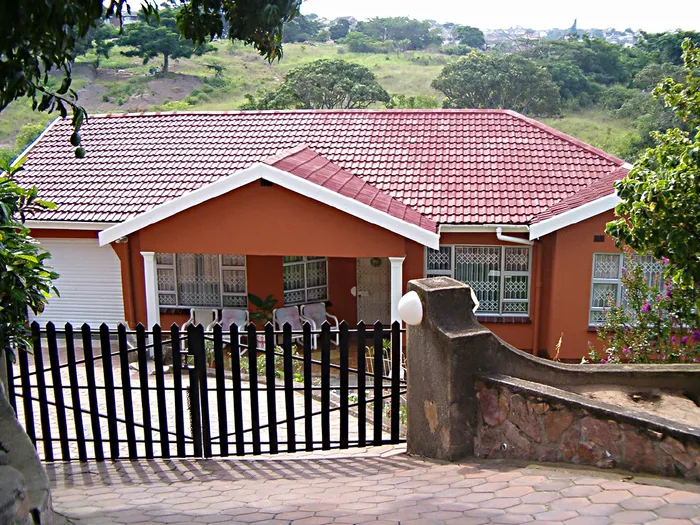
From a household and property affordability perspective, an interest rate hold would offer the most immediate relief, giving consumers more time to adjust without further pressure from rising repayments.
Image: File
As the South African Reserve Bank (SARB) Monetary Policy Committee announces its May interest rate decision on Thursday, the key concern is that households are already under financial pressure, with any increase likely to deepen the burden rather than create it, said Lee Naik, chief executive officer of TransUnion South Africa.
“This is no longer just a rate cycle; it is a broader affordability cycle,” Naik said.
“For homeowners and buyers, the focus must shift from what they can afford in bond repayments to what they can sustainably manage across their full monthly cost structure, including transport, utilities and food."
For tenants, landlords and investors, the environment points to continued pressure on affordability, which may influence rental growth, vacancy levels and pricing strategies, he said.
He added that developers and investors should also expect more cautious demand, with buyers becoming increasingly selective and price-sensitive.
The commercial, consumer, insurance and auto risk information solutions provider noted that, from a household and property affordability perspective, an interest rate hold would offer the most immediate relief, giving consumers more time to adjust to the current cost environment without further pressure from higher instalments.
Even without a rate increase, households are already under pressure.
However, TransUnion South Africa says that given the recent rise in inflation to 4.0% in April, up from 3.1% in March, the likelihood of a 25-basis point increase has strengthened.
“While a hold would be ideal in the short term, it is important to recognise that even without a rate increase, households are already under pressure. The underlying drivers of financial strain, particularly fuel and food costs, will continue to weigh on affordability,” Naik said.
He added that the property sector, particularly in the Western Cape, enters this decision point from a position of relative resilience but increasing pressure. Affordability, he said, is no longer driven by interest rates alone.
He added that while demand has remained relatively strong compared to other regions, affordability is becoming more constrained across the full property value chain.
“This includes homeowners facing higher total costs of ownership, tenants under rental pressure, and investors and developers navigating tighter margins. What has changed in this cycle is that affordability is no longer driven by interest rates alone.
“Households are contending with rising fuel, food and transport costs alongside elevated borrowing costs, which is placing real pressure on budgets. We are already seeing this reflected in behaviour, with more cautious purchasing decisions, increased price sensitivity and greater reliance on credit for day-to-day cash flow management.”
In short, TransUnion South Africa says the Western Cape property market remains active, but increasingly selective and affordability-constrained.
Meanwhile, Liya Peter wrote in a LinkedIn post that an interest rate hike this Thursday would not only cool the market but also effectively penalise hard-working South Africans.
He said all signs point to the South African Reserve Bank (SARB) increasing the repo rate by 25 basis points this week.
“After a brutal couple of years, we finally caught a breath at 10.25% prime. Now, because of global oil spikes and inflation hitting 4.0%, the script is flipping. But let’s be entirely real: South Africans cannot afford this right now.”
According to Peter, consumers are no longer just stretching their rands, they are “out of elastic”.
He added that middle-class budgets have already been eroded by fuel hikes, electricity tariffs and rising basic living costs, making higher bond and debt repayments increasingly unsustainable. Forcing additional pressure onto households at this point, he said, is like “trying to squeeze water from a stone.”
He wrote that the property ladder is effectively turning into a cliff, with first-time buyers already struggling to meet significant upfront deposit requirements.
“Pushing prime back to 10.50% doesn’t just cool the market,” he said, “it actively locks an entire generation of young professionals out of property ownership and traps them in a rental cycle.”
The real estate broker said the South African Reserve Bank (SARB) aims to protect the rand and anchor inflation, but questioned at what cost. He argued that the economy needs growth, business investment and job creation.
“You cannot starve the engine of capital and wonder why the car won’t move,” he said.
“The narrative used to be ‘survive till 25’. Well, it’s 2026, the goalposts have moved again, and the resilience of the South African consumer is being tested to a breaking point,” he added.
The property sector enters this Monetary Policy Committee meeting in a more stable position than a year ago, with improved sentiment and renewed activity across listed property and capital markets, said Justin Davidson.
However, he noted that affordability pressures remain for households, while developers and landlords continue to navigate higher operating costs.
Lower rates would naturally support affordability, confidence and transaction activity in the property market, the portfolio manager said.
However, he noted that the SARB remains focused on inflation expectations and long-term price stability, particularly in an environment where fuel, food and currency-related risks remain elevated.
As a result, he asserts that the MPC is likely to remain cautious, with either a hold or a marginal increase remaining the most likely outcomes.
“While the rate environment remains cautious and data dependent, there are encouraging signs of improving confidence and activity returning across parts of the property sector and capital markets,” Davidson said.
Independent Media Property