

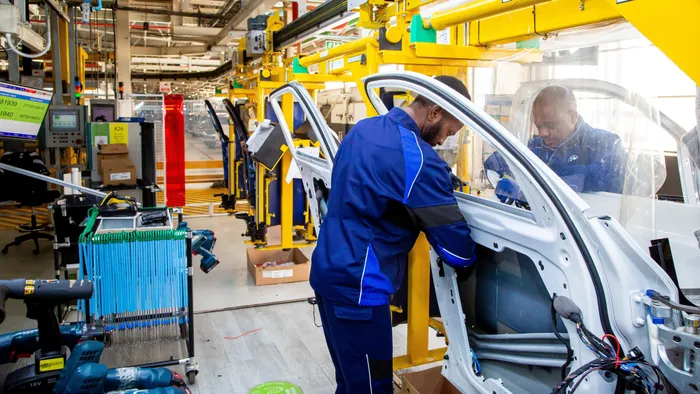
The S&P data points to a modest but encouraging rebound in demand, with new orders increasing for the first time in three months.
Image: File
South Africa’s manufacturing sector showed renewed signs of recovery in April, with business activity strengthening to its highest level in nearly four years, even as companies grappled with surging costs and global uncertainty.
The latest Purchasing Managers’ Index (PMI) released by S&P Global on Wednesday rose to 51.6 in April, up from 50.8 in March.
The reading, which remains above the neutral 50-point mark, signals an improvement in business conditions for the second consecutive month and represents the strongest expansion since August 2022.
The S&P print is in line with the Absa PMI, which climbed to 52.6 in April from 49 in March, rising back into expansionary territory for the first time in seven months since last September.
The S&P data points to a modest but encouraging rebound in demand, with new orders increasing for the first time in three months.
According to survey respondents, the uptick was partly driven by customers placing larger orders amid fears of further disruptions linked to ongoing tensions in the Middle East.
This pre-emptive stock-building helped lift output levels, with production rising for a fourth consecutive month. The pace of expansion reached an 11-month high, suggesting that businesses are regaining momentum after a subdued period at the end of 2025.
However, beneath the improving headline figures lies a growing concern: sharply rising costs.
Input prices surged at the fastest rate in two-and-a-half years, driven primarily by higher fuel prices and increased supplier charges. Around 22% of firms reported rising expenses during the month, underscoring the widespread impact of inflationary pressures across the economy.
These cost pressures have forced businesses to pass on higher prices to customers. Selling price inflation accelerated for the second month in a row, reaching its highest level since August 2024. The construction sector was particularly affected, recording the steepest increases in both costs and charges.
S&P said supply chain disruptions have added another layer of complexity. Supplier delivery times lengthened further in April, with firms reporting the most severe delays in over a year and a half. These disruptions were largely attributed to freight challenges linked to geopolitical tensions, which have impacted shipping schedules and logistics.
Despite these challenges, employment trends offered a positive signal. Companies increased hiring for a third consecutive month, with the pace of job creation accelerating to its fastest rate since September 2022. This suggests that firms are cautiously optimistic about future demand, even as risks persist.
David Owen, senior economist at S&P Global Market Intelligence, noted that the April PMI reading marked a “surprise boost” to the private sector as it rose to a 44-month high in April.
However, he cautioned that the rebound may not be entirely sustainable.
“Order books increased at the fastest rate in over one-and-a-half years, following a relatively subdued period since the start of fourth quarter of 2025,” Owen said.
“However, some comments from survey panellists suggested that the rise was helped by safety stock building as companies anticipated increased headwinds from the Middle East conflict, implying that the uplift in growth may be temporary.”
Owen also warned that the combination of rising fuel costs and geopolitical uncertainty poses significant short-term risks. If the current wave of stock-building subsides, businesses could see a slowdown in demand, particularly if higher prices begin to weigh on consumer spending.
Looking ahead, sentiment among businesses has improved slightly, with companies expressing greater confidence in future activity for the first time in five months. This optimism is supported by stronger sales pipelines, new product developments, and resilience in export markets.
Nonetheless, firms remain cautious, mindful of the fragile global environment and the potential for further disruptions. The ongoing conflict in the Middle East, combined with volatile energy prices, continues to cast a shadow over the outlook.
BUSINESS REPORT