

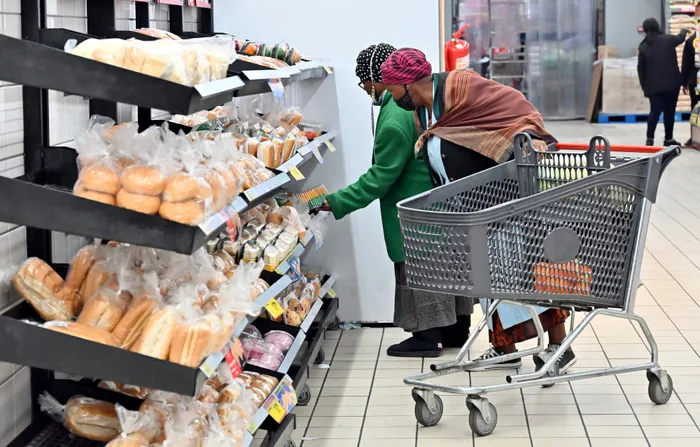
The latest Quarterly Labour Force Survey from Statistics South Africa reveals a troubling rise in the unemployment rate to 32.7%, as the economy grapples with inflation, job losses, and geopolitical tensions.
Image: Ayanda Ndamane/ Independent Newspapers.
The latest Quarterly Labour Force Survey released by Statistics South Africa this past week revealed a stark reality for the country as the official unemployment rate climbed to 32.7% in the first three months of the year from 31.4% in the previous quarter after the economy shed 345,000 jobs.
The economy has been hit by a melting pot of problems, from inflation on a continual rise, fuel prices skyrocketing and interest rates remaining elevated.
Analysts have pointed to the economy not being able to cope with the pressures and a severe failure to spur on job creation.
Many of the issues facing the economy this year has stemmed from negative global developments, as the United States (US) and Iran conflict continues, which have sent international oil prices to extreme highs.
North West University Business School, Professor Raymond Parsons said that while the economy has some resilience and economic buffers, these buffers are limited and partial, with for now little room to extend them.
Parsons said, "The ‘green shoots’ and incipient economic recovery that were apparent in recent months in South Africa have been jeopardised by geopolitical events. The longer the Middle East conflict persists, the greater the downside risks to growth and employment for the rest of 2026. It is therefore clearly in South Africa’s’ economic interests to see an early end to the US-Iran war."
KPMG lead economist Frank Blackmore said the sharp deterioration in employment reflects the intense pressure facing both households and businesses.
“This echoes the pressures that both consumers and businesses face: rising costs, high inflation, elevated interest rates, and, fundamentally, insufficient economic growth,” Blackmore said.
He noted that while South Africa’s working-age population continues to expand rapidly, the economy is failing to create jobs at a pace needed to absorb new entrants into the labour market.
“We need to increase that growth, and to do so, we need to attract international investment and invest more ourselves, which will require, you know, a lot of different initiatives based on the policy space and attracting investment space, for us to get the type of growth rates we need to dent this unemployment seriously,” Blackmore said.
With jobs being lost rather than created, further strain is placed on consumers in the country.
Neil Roets, CEO of Debt Rescue said that the buying power of consumers is being eroded by continual price increases that are outpacing the average inflation rate.
He added that the recent CPI showed how specific, essential household cost drivers showed significant upward movement, contributing to another rise in the cost of living, to 3.1% in March, up from 3.0% recorded in February 2026.
Roets told Business Report, "Equally concerning is the submission by the Pietermaritzburg Economic Justice & Dignity Group (PMBEJD) to the South African Human Rights Commission (SAHRC) earlier in 2026, highlighting the financial crisis for low-income households especially, due to the country’s ongoing cost-of-living crisis."
He added that the Household Affordability Index, provided evidence that sustained, high food inflation coupled with wages that cannot keep up with essential costs, have systematically eroded the ability of millions of households to afford sufficient, nutritious food.
Roets said, "This is not a temporary inflationary shock but a persistent and systemic affordability crisis that is deepening with each passing month."
Another worry for consumers was the fuel price hikes they had to endure in the past two months, with latest data pointing to further increases in June.
Roets said," Consumers were hit by another tsunami of fuel price increases and higher electricity and water tariffs in April and May, while ongoing food inflation continues to out-price essential staple foods from the budgets of millions across the country. By far the most pressing issue for consumers is the cost of essentials such as electricity, water, food and petrol. This came through strongly in a recent Debt Rescue survey which sought to ascertain the financial and emotional state of citizens as they navigate the impact of the price hikes, showing that this is actively pushing households into crisis territory."
"It is simply not sustainable to have an economy where millions of households are forced to choose between putting food on the table or keeping the lights on. Government interventions such as capping energy prices, providing special subsidies, and strengthening food security programs are urgently needed right now," Roets added.
Follow Business Report on Facebook, X and on LinkedIn for the latest Business and tech news.