

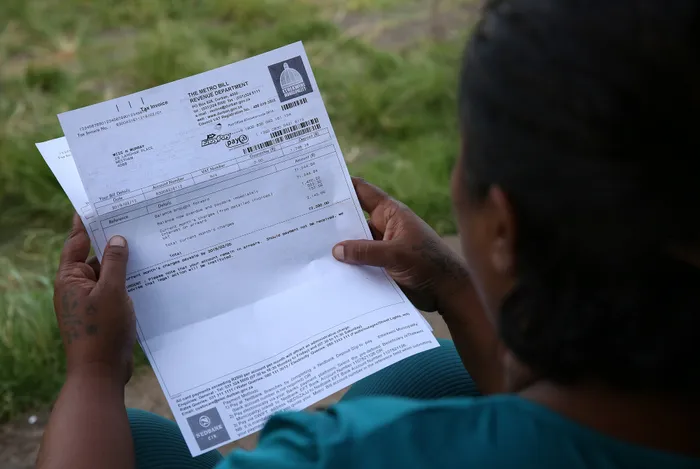
South Africans are paying more for electricity despite using less, as rising fixed charges and municipal tariffs create a new affordability crisis, according to GoSolr's latest Light Paper.
Image: Zanele Zulu/ Independent Newspapers.
While load shedding has largely faded from daily headlines, a new challenge is emerging for South African households and businesses: the rising cost of simply staying connected to the electricity grid.
According to the latest Light Paper released by residential solar provider GoSolr, South Africa's electricity crisis has evolved from one of supply instability to an affordability crisis driven by escalating tariffs, growing fixed charges and inconsistent municipal pricing structures.
The report argued that many consumers are discovering that using less electricity no longer translates into meaningful savings, as fixed fees continue to rise regardless of consumption levels.
GoSolr's findings showed that electricity tariffs have increased by more than 1 100% since 2007. A typical Eskom customer consuming around 800kWh per month paid approximately R1 055 in 2014. By 2024, that figure had climbed to around R3 388 for the same level of usage.
Recent increases have compounded the pressure. Eskom tariffs rose by 8.76% this year, followed by a further 8.83% increase in April, while municipal customers often face additional mark ups that push costs even higher.
According to the report, the issue extends far beyond the electricity units reflected on monthly bills.
"The bill is not the true cost of electricity," the paper stated, highlighting additional expenses linked to generation infrastructure, grid maintenance, transmission losses, electricity theft, non payment, diesel powered emergency generation and municipal surcharges.
Consumers are also carrying what GoSolr described as "invisible costs", including damaged appliances, productivity losses during outages, security expenses and the growing need for private backup power systems.
One of the biggest concerns identified in the report is the rapid growth in fixed connection charges.
In some municipalities, customers are paying substantial amounts simply to remain connected to the grid, regardless of how much electricity they actually use.
The report highlighted significant disparities between municipalities. Cape Town is cited as an example of a more balanced approach, offering smaller fixed fee increases and an optional time of use tariff structure. Johannesburg, by contrast, is identified as one of the most expensive examples, with some customers facing fixed charges of up to R1 761 per month before consuming a single unit of electricity.
The situation is also creating unintended consequences for South Africa's energy transition.
Despite widespread calls for greater investment in distributed energy generation, including rooftop solar systems and battery storage, current tariff structures may discourage households from making those investments.
The report warns that consumers who invest in energy efficiency and self generation are increasingly being penalised rather than rewarded.
Andrew Middleton, Chief Executive Officer of GoSolr, said the country's electricity challenges have entered a new phase.

Andrew Middleton, Chief Executive Officer of GoSolr
Image: Supplied.
"South Africa's energy system is under pressure, but it's not beyond repair," said Middleton.
"What we're seeing now is the result of outdated pricing models that try to maintain the status quo and protect revenues, rather than embracing and enabling a rapidly changing energy landscape."
Middleton acknowledged the progress made in improving electricity supply reliability but warned that affordability must become an equal priority.
"South Africa has made real progress in stabilising its electricity supply. That should be acknowledged. But stability without affordability is not success, it's just a different kind of failure."
He added that the current system is sending the wrong signals to consumers.
"Right now, the system is sending the wrong signals, rewarding inefficiency and punishing progress, while quietly redefining electricity as something not everyone can afford."
GoSolr argued that reform is both necessary and achievable.
Among its recommendations are greater tariff transparency, clearer separation between infrastructure and consumption costs, standardised regulations for embedded generation and reforms to municipal funding models that reduce reliance on electricity sales as a revenue source.
The company believes that aligning incentives with South Africa's evolving energy landscape could unlock greater resilience while supporting affordability for consumers.
"If we can align incentives, embrace distributed generation, and build a pricing framework that is transparent, fair, and future fit, we can unlock a more resilient and inclusive energy system for everyone," said Middleton.
"This is not about choosing between the grid or private power. It's about making them work together. If we get this right, South Africa won't just stabilise its energy future, it can lead it."
As electricity prices continue to climb and fixed charges consume a growing share of household budgets, the debate over affordability is likely to become as significant as the battle against load shedding itself.
Follow Business Report on Facebook, X and on LinkedIn for the latest Business and tech news.