


Acting Police Minister Firoz Cachalia released the fourth quarter crime statistics on Friday. The writer argues that SAPS should be rebuilt with support for the personnel who risk their lives.
Image: GCIS
Zingiswa Losi
When the South African Police Service (SAPS) released its latest crime statistics, workers listened. Not for headlines, but because crime is our daily reality. It is the hijacking of a teacher at 5am on the way to school. It is the nurse attacked after nightshift. It is the daughter who cannot walk home from work. For the working class, high levels of crime are a lived reality. Unless we defeat it, we will not fix the state, grow the economy, or create jobs.
Before 1994, policing was not meant to protect working class communities. Under apartheid, the police were used to suppress townships, break strikes, and defend privilege. Police stations were built in suburbs. Townships and rural villages were left unprotected. The democratic state had to transform policing. New stations were opened from Khayelitsha to Umlazi. Human rights were placed at the centre of law enforcement.
The decade of state capture inflicted massive damage with SAPS hollowed out. Crime Intelligence factionalised, procurement corrupted, skilled detectives left and specialised units disbanded. Today SAPS struggles with the basics of collecting evidence and securing convictions.
Budget cuts made it worse, reducing SAPS headcount from over 200,000 to 180,000. Our police-to-population ratio now sits well below the United Nations’ recommended norm of one officer per 450 people. In many working class areas it is one officer for over 800 residents. When SAPS vehicles are not working, when detectives carry 200 dockets, when rape survivors are told there are no rape kits available, we are failing society.
We cannot talk crime without honouring our brave SAPS members killed in the line of duty. Every year we bury too many. They are ambushed on patrol. They are shot responding to domestic violence. They are killed protecting communities. They are workers.
If we are serious about this war, we must ensure every SAPS member has the necessary protection at all times. That means proper bulletproof vests. It means backup when responding to danger. It means tactical training. It means trauma counselling for members and families. Protecting the police is protecting the public.
What the latest crime stats tell us
The recent SAPS statistics give hope. Murder, attempted murder and armed robbery have fallen but still remain shamefully high. Kidnappings for ransom are rising. Extortion is rampant from Cape Town to construction sites in Gauteng and taxi ranks in KZN. Yet there are green shoots. Several categories of contact crime showed positive declines compared to the last quarter. Precincts with dedicated interventions recorded double-digit drops in violent crime.
This matters. It proves crime can be beaten. Where we resource SAPS, deploy trained members, and work with communities, we turn the tide. The declines confirm the potential to rebuild SAPS and win the war against crime. We build upon these greenshoots.
Crime is a working-class crisis. The poor suffer most. Gender-based violence and femicide are a national emergency. Women are raped and killed at home, on public transport and at work. Children grow up with trauma. Workers lose pay when robbed. Township businesses close because of extortion. Taxi routes shut down because of gang wars.
This is an economic crisis. No investor builds a factory where trucks are hijacked and staff are unsafe. Tourism cannot thrive when tourists are mugged or murdered. The township economy cannot grow when extortionists charge “protection fees”. To attract investment, grow the economy, create jobs, slash poverty and inequality, and generate tax revenue needed for public services, we need to invest in SAPS and massively reduce crime. Safety is the foundation of growth.
A bold war on crime is needed. Slogans and statements are not enough. We must focus on the basics to turn the tide.
Invest in SAPS personnel. Raise SAPS headcount to international norms. End the cuts and recruit. Issue every member bulletproof vests, working firearms, and clear backup protocols. Protect the police so they can protect us.
Invest in skills. Retrain every member in investigations, crime scene management and forensics. Rebuild specialised units for murder, robbery, and GBV. Equip the stations. No station without sufficient working vehicles. Take policing to the people. Deploy mobile SAPS stations to townships, informal and rural areas. Workers should not spend R50 and half a day to open a case.
Dignity for survivors. Ensure every station has rape kits, survivor rooms, and trained officers for GBV cases 24 hours a day. Modernise the tools. Invest in IT, radios that work, and modern forensic databases. Link SAPS to Home Affairs’ Population Registry so DNA and biometrics count. Fix Crime Intelligence. Overhaul it, insulate it from factions, and capacitate it to smash organised crime, construction mafias, illegal mining and gangs.
Work as one state. Support neighbourhood watches and strong partnerships with the National Prosecuting Authority for convictions, Correctional Services to stop prisoners running crime, State Security on criminal syndicates, the Defence Force and Border Management on secure borders, and the Revenue Service to follow the money.
Think globally. Criminals cross borders. Partner with SADC law enforcement and other international partners with advanced capabilities to tackle drug, human trafficking and cybercrime syndicates.
Provide SAPS and law enforcement with the required resources. This costs money now, but a safe country attracts investment, creates jobs, and grows the tax base.
Key to turning South Africa around is to win this war on crime. We defeated apartheid and more recently COVID-19 through unity and action. We will defeat crime the same way.
We owe it to the domestic worker in Soweto fearful for her life as she walks to work. We owe it to the SAPS members who die defending us, and who report for duty each night.
Rebuild SAPS. Support the SAPS personnel who risk their lives. A safe South Africa is a working South Africa. That is the South Africa workers demand. That is the South Africa the Congress of South African Trade Unions (Cosatu) is fighting for.
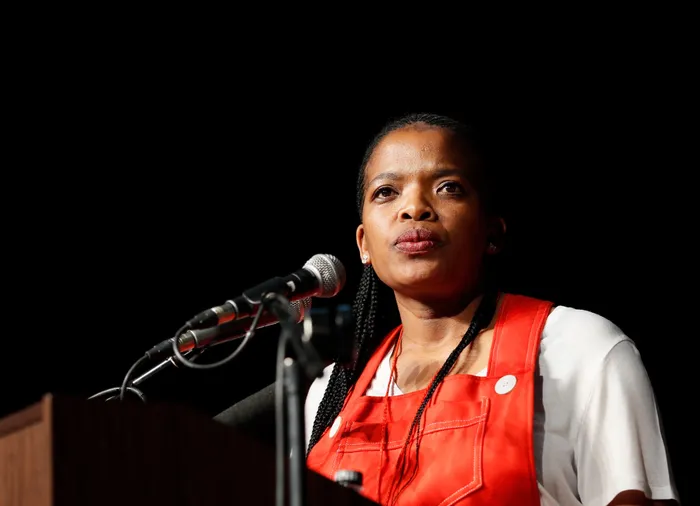
Zingiswa Losi is the president of Cosatu.
Image: Independent Newspapers
* Zingiswa Losi is the president of Cosatu.
** The views expressed do not necessarily reflect the views of IOL or Independent Media.
BUSINESS REPORT